Building trust in the open
How Protocols for Publishers points to the future of journalism – and the web

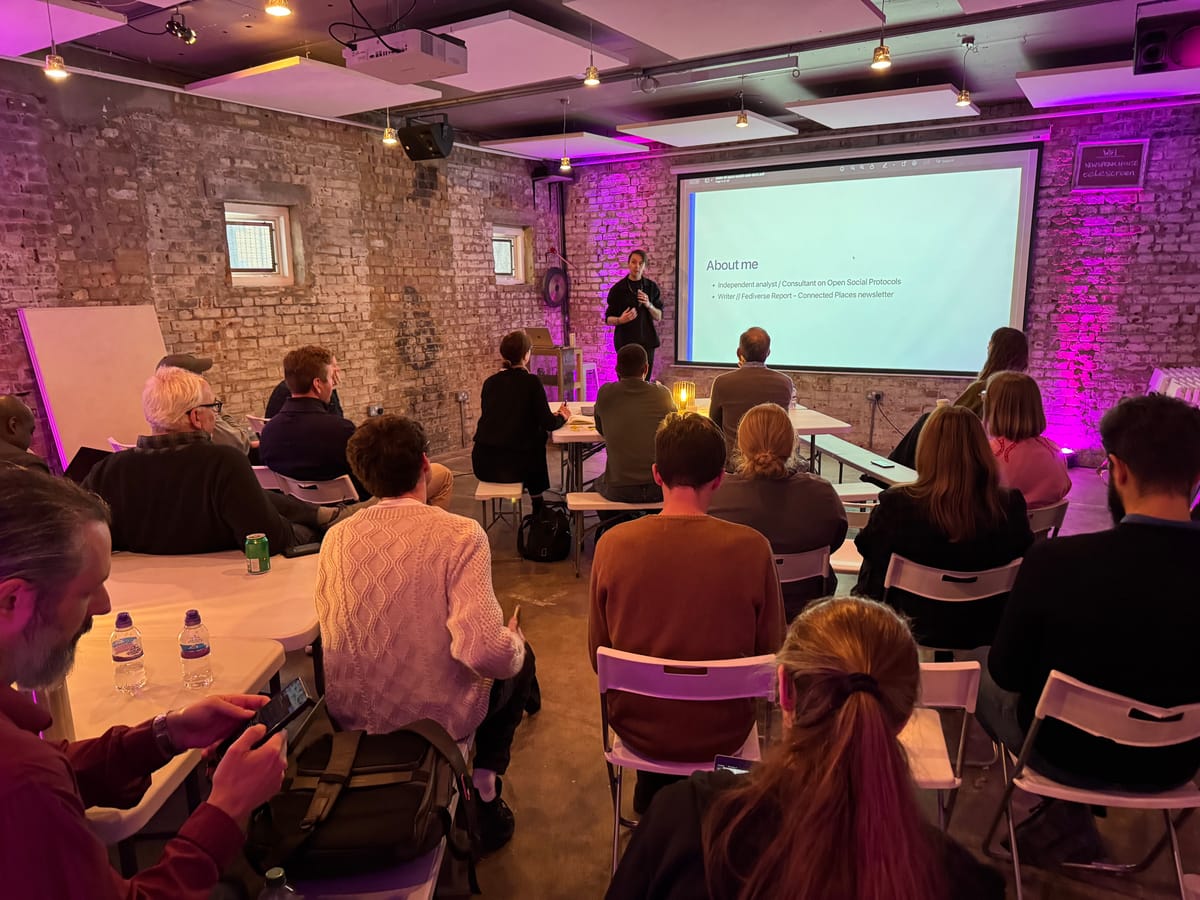
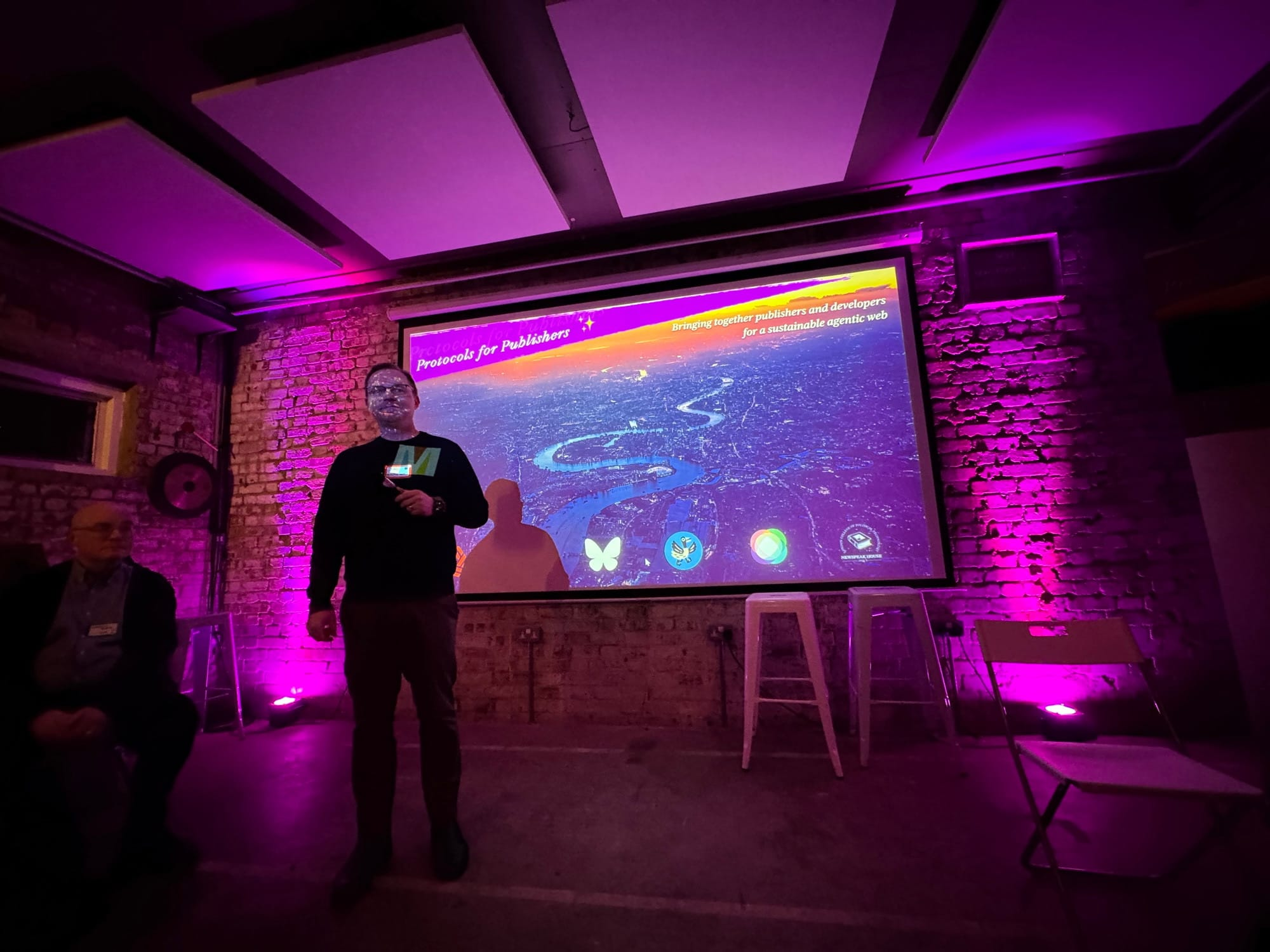
Earlier this month I had the privilege of being the MC for the second Protocols for Publishers event, which took place at Newspeak House, an independent college for political technology at the top of London’s Brick Lane.
London itself has been under attack in some circles. Ruby on Rails creator David Heinemeier Hansson wrote a screed last year, which I won’t link to, in which he talked about the city falling to what he called “demographic replacement” — a statement so blatant that it barely even qualifies as a racist dog whistle. There have been many similar allegations, mostly from the American right wing, who I suspect hate that London has a Muslim mayor.
It was my first time back in eight years. What I found was a beautiful, well-run city, utterly vibrant in its diversity and notably inclusive in its demeanor. The food, once the butt of jokes the world over, was superb, having gained immensely from its internationalism. Compared to what I’ve become used to, the city was spectacular. It was surreal, in a way, to be in a place that was the backdrop to so much of my younger life; more surreal still that it has been so maligned while I’ve been away, but in reality has become even better. Newspeak House is a venue tucked into the middle of all of it: a residential, full-time college and event hall all in one, all designed to be hyper-connected to the society evolving around it.
This is relevant, I promise. I’ll come back to it.
Journalism and the open web need each other
Here’s how I framed the conversation on the first day. My intention was to pull no punches and make it clear why open social protocols matter in the real world:
Running technology in a newsroom in this era has been fascinating. Journalism, when it’s done well, is how we become informed citizens, and how, in turn, we make informed democratic decisions. That’s always important, but I’ve just flown in from a country that is very quickly descending into authoritarianism. Children are being kidnapped. People are being killed. I would argue that journalism is even more important than it has been in a very long time.
Journalism is also under threat. Certainly, at least where I live, from the government, which has decimated funding for public media, among other things. But search engine and social media referrals are down, trust has long been declining, and their relationships with their followers have been intermediated. Lots of newsrooms have found refuge in email newsletters, which they see as the last place they can directly own their relationships with their communities — but, guess what, AI intermediated inboxes are coming.
It sure seems bleak.
But. But! All is not lost.
Around the world, there are communities of mission-driven technologists who want to make sure publishers and community owners can own their relationships with their members and participants, and create their own community cultures rather than accepting some corporation’s version of how people should interact. They have been working for years, sometimes for decades, to build an alternative to the prevailing Big Tech view of the world.
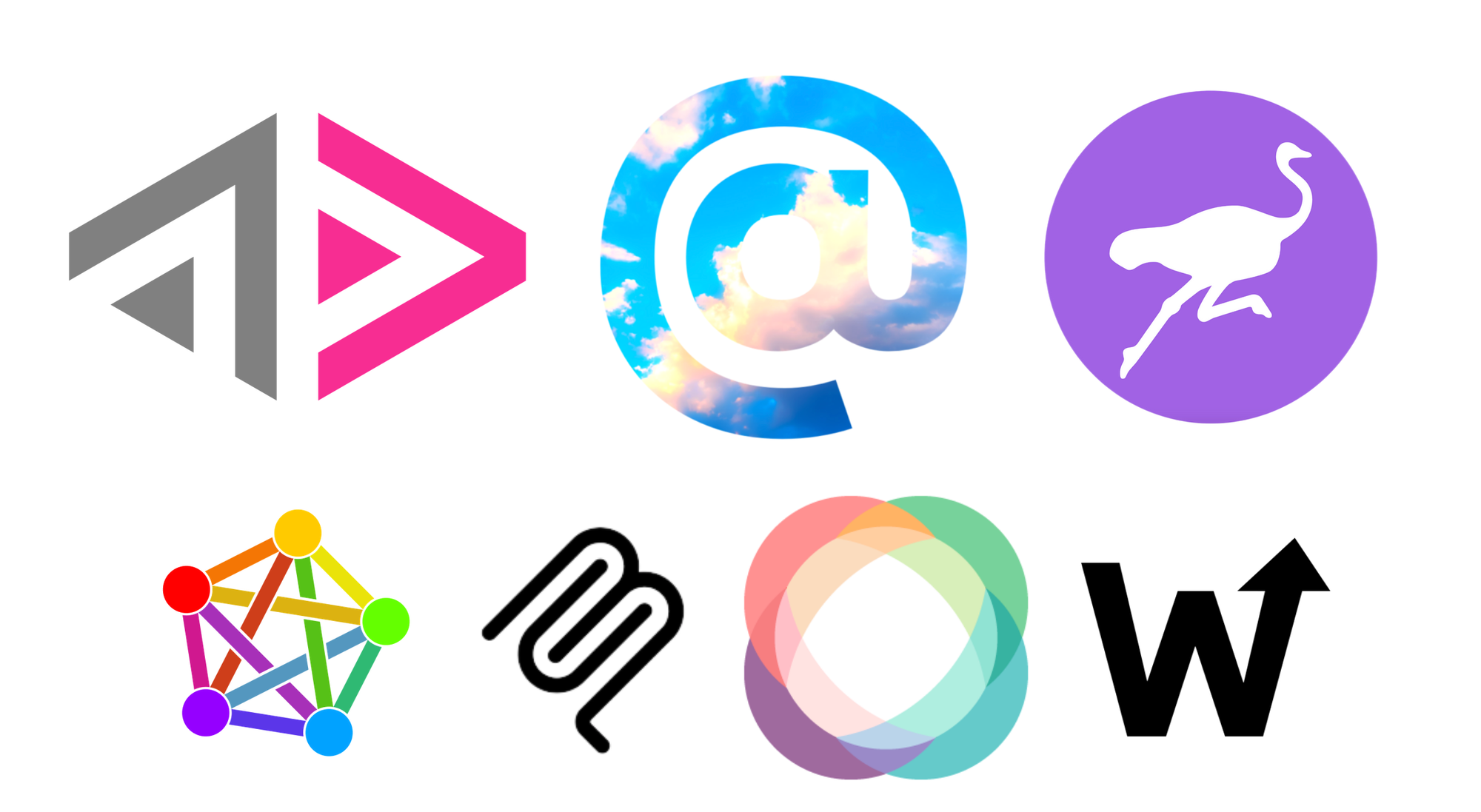
Those communities eventually evolved into what we call the open social web: a fabric of protocols that provide all the functionality of social media, and more, but with the open ownership of the web. The fediverse (projects like Mastodon) and the atmosphere (Bluesky to its friends) are movements at heart, powered by open protocols. The indieweb community encourages everyone to own their own publishing surfaces.
They’re like the web itself: no-one owns them, and no-one can co-opt them. They have the potential to allow publishers to build first-party relationships with their communities without intermediation, entirely on their own terms.
Publishers tend to look inwards to other publishers for their answers; people in tech tend to look to other technologists. But there’s so much to be gained by talking to each other. By working with each other to build the platforms we all wish we had.
Publishers could really use the sovereign properties of protocols. And the people building protocols really want to understand how they can be useful to publishers.
Which brings us to this room.
The first step is to talk to each other
One of the key points I make at every news event I speak at is that the journalism industry tends to treat technology as something that happens to it, like an asteroid. But it doesn’t need to. It can build its own technology, and it can work in collaboration and co-ownership with existing open source communities. That collaboration, in particular, is what I hope will arise from the relationships built at the event.
We hosted four conversations on the opening night.
I moderated a Q&A with Siddhartha Kurapati from the Bristol Cable and Saskia Welch from the Newsmast Foundation. The Cable is a reader-owned local newspaper that has partnered with Newsmast to build an app that includes a full, Mastodon-powered community for paid members.
It’s a very slick, consumer-grade experience, as you’d hope; a well-run community layer in a local news app provides a gathering point for people to discuss local issues, meet up, and share resources that matter to them. What’s particularly cool is that because it’s fediverse-compatible, the community can expand to include members from other local newsrooms and beyond, who can participate from the apps that matter for them. Over time, that creates a social substrate of engaged members — something that’s hard to get from existing social media.
We then heard from Ændra Rininsland, who gave what she called “a brief history of algorithmic fuckery” — a précis of every time centralized social platforms have pulled the rug out from under the communities they were theoretically supporting. With that frame in mind, she demoed the work she’s done to create algorithmic feeds for News in the Bluesky ecosystem that highlight publishers and help ensure that real journalism makes its way to social readers. Her point was that news can create its own algorithms and technology, too, rather than simply being subject to other people’s. Again: journalism can build.
Jeremiah Lee from the Interledger Foundation delivered a provocation about micropayments. Noting that putting journalism behind a paywall allows authoritarianism to thrive (because most people don’t have access to the facts that would help them make good democratic decisions), he pointed out that Spotify-like streaming payments turned the fortunes of the music industry around. His argument was that it could do the same for journalism: something the Interledger Foundation is excited to experiment with.
Finally, Nick Bennett from Mozilla Data Collective talked about AI scraping. Most publishers have had to deal with the issue at this point, making policy about whether to allow it or not, sometimes suing the AI vendors and sometimes making deals. But it turns out that all of this data only amounts to around 1% of the data that could be ingested. Mozilla wants to help AI vendors get access to some of the rest while doing it on the data owners’ terms: creating what it sees as more equitable ways for models to acquire training data. Most of the protocol builders and publishers came in with a fairly anti-AI stance, so this was a brave provocation in itself.
The second day was all about conversations. Laurens Hof from Connected Places gave an overview of the protocol landscape, discussing recent developments in the context of the rest of the technology landscape, including AI and societal changes. This set us up to have some useful connected discussions.
Small groups of technologists listened to the newsrooms describe their challenges across Discovery & AI; Monetization & Sustainability; and Audience & Community. Finally, we turned the tables and opened the floor for protocol builders to talk about how their work might help to address those challenges and how they might work together.
The point was not to get to a conclusion. You can’t solve these problems in a day, but you can build relationships and create the conditions for collaborations where none existed before.
Community is the antidote to an AI-driven web
In her writeup of the event, Mia Biberović, Editor-in-Chief of Balkan tech outlets Netokracija and ShiftMag, noted that smaller publishers have more to lose — and therefore more to gain from open protocols:
All publishers operate within the same distribution environment - search, social media, and increasingly AI-mediated discovery. However, the effects of that environment are not the same, nor are the risks distributed evenly, particularly once the ability to maintain a direct relationship with audiences begins to erode. […] For smaller publishers, this often also means losing what little direct relationship with their audience they still have. […] Open protocols currently offer more tangible value to smaller publishers than to larger ones.
Larger publishers tend to be older and wealthier: they’ve had more time to build a relationship with their communities and they typically have more money to enforce it with marketing. In my local community, the Philadelphia Inquirer often runs wide marketing campaigns; the Kensington Voice, which is a much-needed startup newsroom that covers an underserved part of Philadelphia, cannot.
There is a difference between news and journalism. The first is information, and the second is context. News has become heavily commoditized: recently, the Pew Research Center found that only 8% of Americans feel the need to pay for it. Journalism, on the other hand, has not been as commoditized. That’s where relationships become important, because we all care where we get our context from. We want to get it from people we think won’t manipulate or mislead us, who have accumulated enough social proof for us to trust them. Ideally, they should be people we know, but sometimes those are parasocial relationships.
Titles like The New Yorker and people like Seymour Hersh and Ronan Farrow have had time, space, and money to build that social proof; newcomers have not. AI can deliver commoditized news, but it can’t build the trust relationships that make journalism valuable.
The way newcomers can fight their lack of social proof is by building tight communities that nurture and support their audiences. You might not trust a newspaper you haven’t encountered before, but you might trust the humans behind it if you can be in conversation with them.
By using open protocols to build those communities, these conversations act as a discovery engine:
- You can discover a conversation about your local area (or topic that’s important to you) on your existing social platforms.
- It’s easy to follow the conversation thread to discover the publication that hosts them.
- You can then make the jump and experience those conversations through the publication’s site or apps, signing up in the process.
- When you do, you gain access to more features and greater depth, growing your relationship with the publication itself.
It isn’t all about these conversations. It matters that the open social web doesn’t suppress links to journalism, unlike every commercial social network. But this access to the humans behind a newsroom, and the other humans in its community, is what builds trust. People are wired to trust other people, not brands.
I have a relationship with London. When I walk Brick Lane, I remember being in my twenties, getting a salt beef beigel at the Beigel Bake or drinking a Red Stripe in a cafe with my friends. Those human connections are what keeps it alive for me; it can be maligned by some right wing talking head thousands of miles away, but nobody can take away those experiences, or the connections I have with people who still live there and can report first-hand on what they experience. It’s a city that’s predisposed to make me smile — and it did that in abundance. The social proof outweighs any argument a racist screed could make.
Stronger communities could be built on traditional social media platforms, too. But those have proven themselves to be unreliable partners: remember that referrals are down, links are being suppressed, and trusting a tech company means letting tech happen to you, like an asteroid. Open protocols are permissionless; building on them means building real ownership, as long as the protocols are built with publishers in mind.
If only the publishers and protocol builders could talk to each other!
Thank you
I was very grateful to Chad Kohalyk for inviting me to MC, and to everyone who attended. I’m also indebted to the sponsors that made it possible, which included:
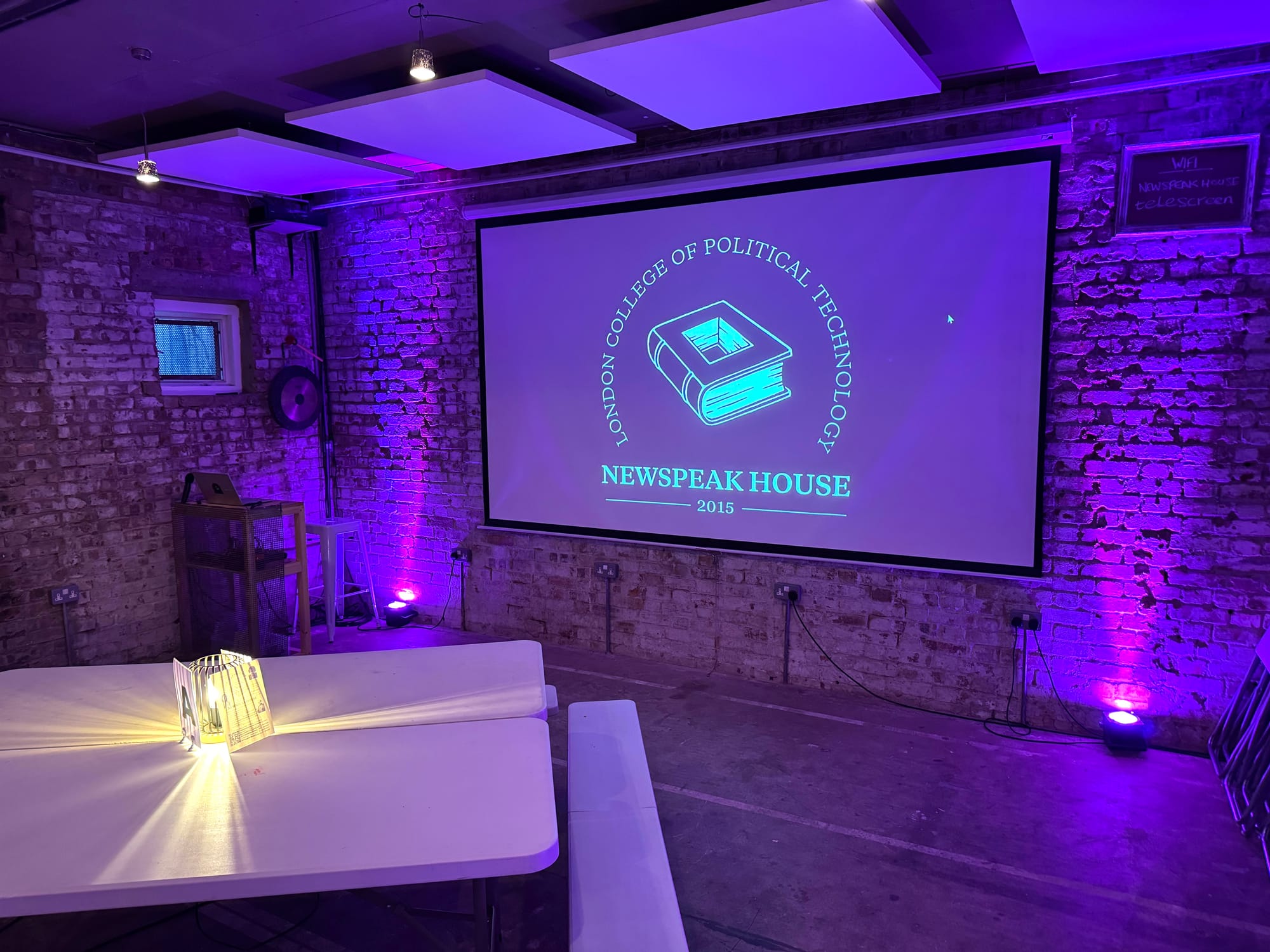
Not to mention the incredible Newspeak House, which I wish I could live in full-time.
More Protocols for Publishers events are on the horizon. If you want to stay in the loop, go sign up for the Protocols for Publishers newsletter, subscribe via RSS, or follow them on Bluesky or Mastodon.
