Friday links: December 19, 2025
Predictions for journalism; paperbacks are dead; feeling the fear.

Every Friday, I share a handful of pieces that caught my eye at the intersection of technology, media, and society.
This week's links are all about change: a journalism industry in flux, the very sharp decline of mass market paperbacks, and a simple framework for navigating risk in your own work.
Did I miss something important? Send me an email to let me know.
Nieman Lab's Predictions for Journalism 2026
The annual Nieman Journalism Lab Predictions for Journalism is always interesting. They’re often not so much predictions as either warnings or wishcasting; a finger on the pulse of what people are actually thinking inside newsrooms. It’s well-curated, and even the design of the site is always interesting year-on-year.
Here are some pieces that caught my eye, although you should go check out the full set.
In my piece about personalization, I already highlighted a segment from Gina Chua, who I think is one of the sharpest thinkers in news:
“Chatbots are coming to news — strike that; they’re here already — and we’re going to have to find a way to work in that world, despite all their well-documented limitations. This isn’t an argument that chatbots are a good source of news, but it’s a prediction that more and more people will turn to them because they provide something legacy newsrooms don’t: personalized information that’s more useful for each user.”
The Pivot Fund CEO Tracie Powell has a strong point to make that is ostensibly about the current obsession with using influencers in news, but is far bigger and deeper than that:
“The Prediction: In 2026, the collapse of “big social” and mass youth abandonment of mainstream platforms will force journalism and philanthropy to rebuild civic information systems around something social media no longer provides: trust, safety, and community control.
Influencers won’t save journalism. Algorithms won’t save journalism. Corporate platforms won’t save journalism.
Communities will. But only if we pivot — fast.”
Tedium’s Ernie Smith points out the inevitability of building walls around our content to keep it safe from AI vendors:
“Memetic metaphors aside — I didn’t expect the leopards to eat my face — I think it highlights the challenges that small or niche publishers face in this new environment. Old-school new media folks might prefer to avoid paywalling everything to within an inch of its life. (Some may even do crazy things like offer full-fat RSS feeds, heaven forbid.) But it’s becoming increasingly clear that if you don’t gate at least some of your content, you may be putting yourself at risk of just letting a tool like Grok or Perplexity eat your lunch.”
The Continent publisher Sipho Kings has some bleak words about the future of local news:
“But we’re not learning from the past. Instead, we’re approaching this new era of generative AI much like we did platforms. Big Western newsrooms are signing secret deals to make some money. Our luminaries talk of the opportunities that come with becoming a feedstock to genAI companies (no doubt prompted by media events being sponsored by AI companies). The rest, notable exceptions noted, are already on the verge of collapse, and are using AI to replace journalists, then hoping the algorithms can get gamed.”
But it’s not all doom and gloom. PRX CEO Kerri Hoffman published a call to action that I strongly agree with:
“Right now, many of those underlying systems are controlled by a small number of commercial platforms, ad tech companies, or vendors whose incentives don’t always align with public service. The risk is that public media becomes just another content supplier in someone else’s ecosystem, subject to someone else’s rules.
Building shared, mission-driven infrastructure is a way of clearing the path.”
And Knight Chair in Journalism Innovation Damon Kiesow thinks there’s a big opportunity for us to build our own, discrete small language models that are potentially more useful than the LLMs provided by big tech companies:
“If publishers embrace small language models and open standards, they may regain some control over how local knowledge is collected, delivered, and valued. For decades, news organizations have tried to win while playing by Big Tech’s rules, but MCP and SLMs give them something new in the digital era: a home field advantage. The platforms own the pipes, but publishers can own the intelligence that matters most to our communities.”
Question Everything host Brian Reed thinks the news industry will re-examine its relationship with the tech industry and understand how abusive it has been:
“I think 2026 is the year journalists will widely reframe our understanding of tech platforms: to see them as more akin to cars than to newspapers. We will realize that tech companies have exploited journalists’ greatest weakness: our love of the First Amendment. And that will finally free us to push for serious accountability from some of the biggest companies the world has ever seen.”
And the always brilliant Jenn Brandel makes a remarkable prediction that speaks to how the relationship between AI companies and news might evolve:
As AI companies move to secure journalism as an input, journalists move to reclaim journalism as a public act.
One shift is structural, the other is philosophical. Together, I predict they will redefine the profession’s future.
And that brings me to my own prediction, where I call for the news industry to collaborate together to build new technology that genuinely serves the news ecosystem:
“The solution isn’t to retreat from technology. Journalism needs better tools, built for their needs and values. But they also shouldn’t be in the business of building it themselves. The main business of a newsroom is producing journalism; rightly, their cultures, incentives, and goals are centered around the work of telling the truth about the world.
Software built inside newsrooms often fails, not because the teams aren’t talented, but because the incentives, culture, and resources of journalism simply don’t match the operational demands of running products sustainably. But after years of extraction, journalism’s relationship with the tech industry has become abusive. Something else is needed.”
Again: the complete set is worth reading. What stood out to you?
Last Call for Mass Market Paperbacks
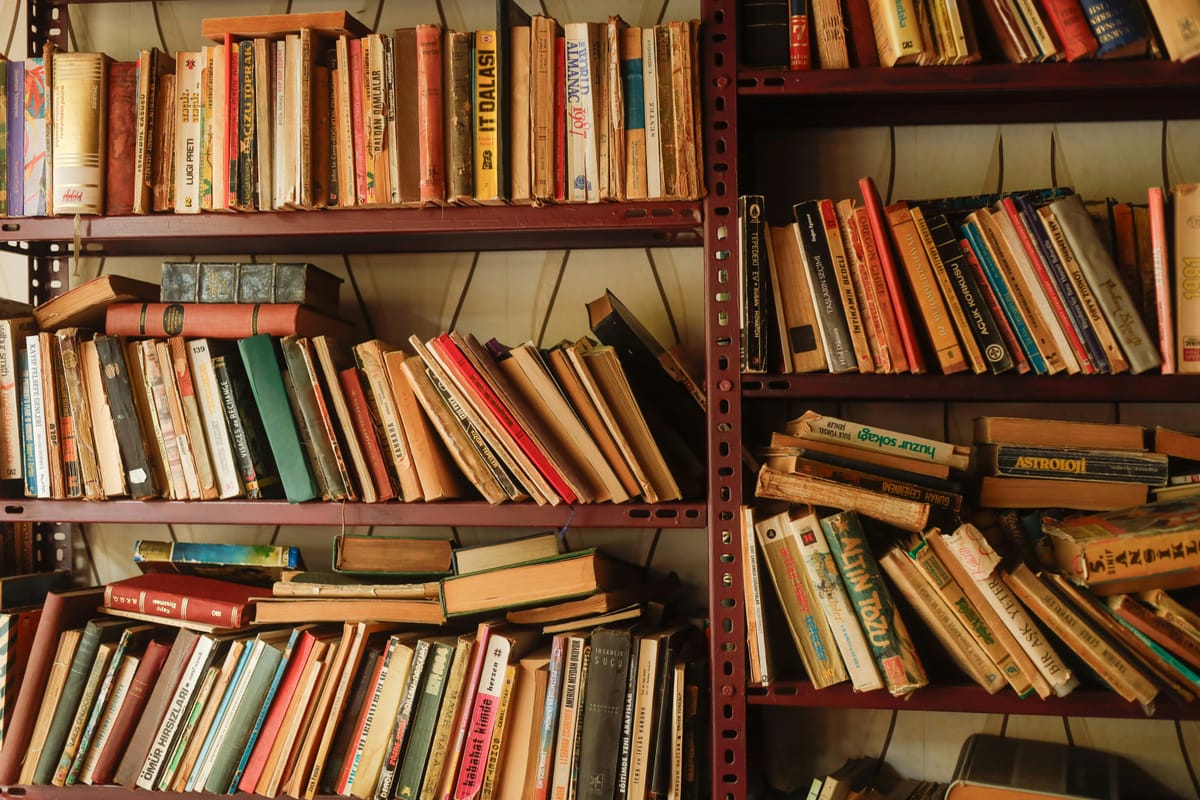
This is not the death of mass-market books, but it’s still pretty striking that mass-market paperbacks are about to disappear in a real way. ReaderLink, the largest book distributor in America, is going to stop carrying them — and we’ll notice the effect immediately. (Or, at least, we’ll notice the effect if we frequent places where books are sold, which we all still do, right?)
“According to Circana BookScan, mass market unit sales plunged from 131 million in 2004 to 21 million in 2024, a drop of about 84%, and sales this year through October were about 15 million units. But for many years, the mass market paperback was “the most popular reading format,” notes Stuart Applebaum, former Penguin Random House EVP of corporate communications.”
I was a paper-only reader holdout for years. I love the feeling of paper in my hands, and the cognitive switch of not looking at a screen when I spend all day in front of one. Then I had a kid. The best time I had to read was in bed while he slept beside me, but he kept stealing my reading light as a toy and removing my bookmarks so I lost my place. I finally caved and bought a Kobo Libra Colour, which has a built-in backlight and a PIN that means no-one can mess with my books. I didn’t expect to love it, but I immediately did, and virtually every book I’ve read since then has been on it.
So, I guess what I’m saying is: I guess I get it.
I do think it’s a loss though. Both my grandparents and my great grandparents kept houses filled with old books, many of which were paperbacks. Those stories have lasted for generations in those bookshelves, throughout many cycles of technical obsolescence. My Kobo won’t, and when he’s old enough, I won’t be able to pass many of the books I’m reading down to my son. That’s a real generational / cultural loss.
When he’s old enough that I can read paper books again without fear of losing my light or place, I can switch to hardback editions, but at over twice the price, there’s a higher bar to buying one. And not every book ever makes it to hardback. They’re the vinyl records of books: beautiful to look at and owned by enthusiasts, but not a mandatory stop for each new release. And while I can buy these books to intentionally hand them down, it’s the unintentional accumulation that’s more interesting: the ability for him to pick out what he thinks is worth reading from my bookshelves.
Of course, libraries exist, and that’s maybe the solution here. Libraries are obviously wonderful, but they’re also under threat. We’ve needed to protect them with our lives for some time, but that’s even more true in a world where our home bookshelves are dwindling and the books we read are succumbing to technology capture.
Of course, that’s the story of the web, too. The Internet Archive — itself a library — is one answer to that on a cultural preservation level. But it’s the loss of that intergenerational and intra-community hand-me-down facet of writing-as-objects that really bothers me. I don’t know what the answer is.
The Go/No Go Date
It’s no secret that I’m a fan of Corey Ford and his approach. It’s not an arms-length relationship: he invested in Known, I came to work for him as west coast Director of Investments at Matter Ventures, and I get a lot of value out of his ongoing coaching at Point C. Given that relationship, the ideas he’s been publishing on his website aren’t new to me, but I appreciate his condensing them down into resources I can point other people to. They’re very good ideas, articulated into repeatable frameworks that are easy to understand.
The Go / No-Go Date is a really important tool for anyone building a startup or innovation project.
“Feeling fear goes hand-in-hand with being ambitious. Imposter syndrome is real and normal. In fact, if you aren't feeling fear in what you do, I'd argue that you aren't being ambitious enough.
The goal isn’t to avoid fear. The goal is to feel the fear, name it, and act anyway. Your job as an ambitious person is to practice standing in fear, becoming comfortable in that spot, and doing what you set out to do.
[…] The Go / No Go Date is an exercise that you can do early on in a journey of ambition that helps you manage that fear in order to maximize your energy and utilize the precious runway that you have.”
Imposter syndrome? Moi?
The Go / No-Go Date is all about giving yourself permission to do something risky, because there’s a defined date when you’ll evaluate if you should keep doing it. For me, the power is in allowing yourself to face the fear that something might not succeed and build it into the process. In doing so, you’re not constantly struggling with that fear, watering down your ambition in the process.
You’re also not ignoring the fear, which some founders erroneously think is a sign of strength. Being clear-eyed about what the worst thing that can happen actually is allows you to plan for it and establish frameworks that allow you to innovate anyway. Anything less than realism about the pitfalls is magical thinking — but this simple idea allows you to be brave and try something new anyway.