2025: a personal year in review
Highlights and hopes for the new year.
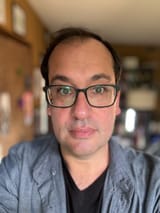

After last week’s downer of a global year in review, I decided I’d like to go back and do a more personal review, as well as share a few hopes for the new year.
Highlights from 2025
Working
While I don’t intend to share the internal workings of ProPublica in these pages, the events of the year certainly had an effect. Members of the government described the newsroom in ways that I won’t repeat here; it’s a surreal feeling to work for an organization that finds itself in the crosshairs.
People often support ProPublica because they feel like it’s making a difference at a time when people feel powerless. It’s a huge responsibility. Doing the work to support these journalists feels meaningful. It’s far more than keeping a website online: it’s a working newsroom with very unique technical and security needs across reporting, source management, and publishing.
It’s demanding. Unlike jobs where I’ve been hired for a specific individual skill, here I bring my whole self to work every day, even if I sometimes find myself thinking, “I was a web developer — how did I get here?!”
And I get to do it in community with incredibly smart, values-aligned people who care. I love it.
I also care deeply about the open social web. At the same time as my ProPublica work, I’ve had the privilege of serving on the board of A New Social and being present in communities trying to create a more pro-social future for connecting online. Again: it’s been a privilege.
Speaking and travel
Speaking
I facilitated a Designing for Equity workshop with Roxann Stafford as part of a Product Immersion for Small Newsrooms bootcamp in February 2020, which in retrospect was just moments before the pandemic. And then I didn’t speak again for almost five years.
Last November, I broke this streak by taking part in a panel at Yale Law School’s Access & Accountability conference. We were asked to discuss how AI tools can help make transparency-oriented processes like FOIA requests more efficient and effective — and where the pitfalls are.
I trust some of the best investigative journalists in the world to be able to navigate hallucinations and bias — it’s the power dynamics that really worry me. This includes worries about data shared with cloud services being available via subpoena, despite their encouraging us to share more and more sensitive information. Based on my experiences in the tech industry, and particularly in the investor ecosystem, I raised concerns about the business models and priorities of large AI companies and what the impact of importing them into a mission-driven environment might be. How do those dynamics play into FOIA requests and government transparency without putting a newsroom at risk — or worse, a source?
I continued this conversation at events in 2025. My core is always that we should own the technology we use, rather than the other way around. After every appearance, I received thank you messages from people who attended, who found that message refreshing. Other people have these worries, but in the push for AI adoption, they haven’t always felt safe to voice them.
At UC Berkeley’s Logan Symposium on Investigative Reporting, I had the privilege of being interviewed by Garance Burke, who leads investigative journalism projects at the intersection of technology and society for the Associated Press. We talked about the conflict between the values of AI vendors and the values of investigative journalists who want to spur reform through their work.
At the International Journalism Festival in Perugia, Italy, the conversation continued. I joined Upasna Gautam and Damon Kiesow in discussing building newsroom technology using a community-first lens. We made it clear that we can all own the technology we use, but it requires a change of mindset. A holistic understanding of systems of power is the most important skill to navigate products and newsrooms with their own systems of power, incentives, and hierarchies.
At FediForum, an online conference, I tackled this intersection from the other side. FediForum is a community of values-led technologists who are building the open social web: my keynote encouraged them to seek concrete uses and communities rather than live in ideology-land, particularly because there are so many vulnerable communities that need their work.
At the first in-person News Product Alliance Summit in Chicago, Damon, Upasna, and I reprised our talk about a community-focused ethic of news technology. I also ran a hands-on workshop to help newsroom product leaders think about how to create a rubric for assessing technology in a values-aligned way.
Finally, I spoke on a panel at the AI and Journalism Summit for News and Technology Leaders at Hearst Tower in New York City, to talk about assessing the risks and benefits of AI.
Traveling
Beyond speaking, work engagements brought me to Seattle and San Francisco. I particularly loved coming back to the Bay Area twice (once for the Logan Symposium, once for another non-conference reason); I hadn’t been back since I moved away, and it felt like coming home in a way I hadn’t been prepared for. Going to Chicago for the NPA Summit, too, felt like a reunion with so many good friends.
And then there was Italy, which made me realize how much the pandemic had blown a hole in my life. I hadn’t left the United States since 2018. It was very good for my mental health.
While work took me to a bunch of places, I traveled to just two locations for fun. I spent a week in Massachusetts hanging out with my sister and extended family, who all live on Cape Cod, and two weeks in Oregon to hang out with my partner’s.
Cape Cod in particular has a ton of emotional resonance for me: growing up in Britain, it was the only part of the US we kept coming back for (my great grandparents built a house on the upper Cape over a hundred years ago, and it’s where my mother’s side of my family all congregates). With the exception of a year in North Carolina when I was 11 year old, it was what I knew of the US until I was 18 or so. But I haven’t spent enough time there, and particularly with my sister and extended family, since my mother died. My son adores his aunt, who is a meaningful force for good in his life. They need more of each other.
Books
I read voraciously in the first half of the year, and as the emotional turmoil of the year accumulated, I slowed down. As ever, I get my most consistent reading done on my Kobo Libra Colour while my son snoozes next to me; it’s made reading with a toddler possible (particularly now that I’ve PIN-protected it so he can’t lose my place).
Reading is important to me. I feel significantly better on days when I’ve spent time with a book than when I haven’t. Concentrated, dedicated time with long-form writing is both meditative and nurturing. The novel, in particular, is my favorite thing: somehow the last commercial space that feels true and intimate, and in preserving that, a little transgressive.
I loved just about everything I read this year, but here are what I’d consider to be my top six across non-fiction and fiction. You can, as always, follow all my book reviews via my Bookwyrm account.
Fiction
Death of the Author, by Nnedi Okorafor
A reflection on storytelling, the self, and the interaction between the two. It’s science fiction, for sure, but it doesn’t fit neatly within that boundary. I won’t spoil the final line, but it encapsulates the form, the medium, and the story perfectly — and sheds light on a subtext that hadn’t revealed itself to me but is a rich seam throughout the book.
The Memory Police by Yoko Ogawa, in translation by Stephen Snyder
I appreciated the resonances in Ogawa’s 2020 novel – of loss and death, of censorship and control, of the rigidity life takes on as you grow old. The themes of inevitable loss in particular spoke to me and made me realize truths about people I’ve lost and people I know I will lose soon because time is out of my control. You can accept it, you can frantically try to hold on, but it will happen anyway.
Automatic Noodle, by Annalee Newitz
I'm not normally much of a cozy fiction reader, but this was lovely: smart, funny, and pointed in highly relevant ways. The story is a simple, warm hug in so many ways, but there's a lot going on underneath to inform the world that Newitz builds; a very dark, involved tale sits just out of frame.
Non-fiction
Empire of AI by Karen Hao
If you only read one book about AI, make it this one: it’s the definitive chronicle of OpenAI’s internal machinations, and by extension, Anthropic’s and Google’s too. If you want to understand the power dynamics of this kind of Silicon Valley company, and of AI in general, it’s a must-read. Meticulously researched, incredibly detailed, and damning as hell. I wish all tech journalism was done this well: the tech industry and the world would be in a very different place.
One Day, Everyone Will Have Always Been Against This, by Omar El Akkad
Written with absolute moral clarity, the argument here is searing, precise, and visceral. While I don't know how to make people care, the immediacy of the author's writing goes a long way towards bringing this genocide, these atrocities and abuses of human life at the hands of empire, home. He makes the unimaginable imaginable, but does not dilute the horror in the process.
Nobody's Girl, by Virginia Roberts Giuffre
This memoir goes far beyond the author’s entanglements with Jeffrey Epstein: it contextualizes them in a lifetime of abuse that also reveals shortcomings in the society that should have protected her. Her story is obviously a tragedy, but it’s contextualized by her ghostwriter in the introduction, who explains that her husband — described glowingly throughout — was also an abuser. There are so many moments that made me sit up (it’s worth looking into the “well-known Prime Minister” she references choking her), but the institutional failures that protected the powerful remain the most striking, haunting thing.
TV and movies
Movies
The pandemic scared me away from movie theaters for a while, and having a toddler means I have seen exactly two movies in one since 2020. The first was Barbie; the second was A Complete Unknown, which I managed to catch at the beginning of the year. It’s well put-together; for me, Edward Norton’s Pete Seeger was a standout performance. I grew up on Dylan, Seeger, Guthrie, and those generations of political American folksingers, and I appreciated the texture.
Like many people, I was enamored with Sinners, Ryan Coogler’s vampire film that has a lot to say about cultural power, appropriation, subjugation, and how these factors are intertwined with the history of America. Even the mix of genres themselves are part of the commentary. It’s brilliant on many simultaneous levels and invites rewatching.
But the standout movie for me was 2020’s Nowhere Special. It’s a simple film about a terminally ill single father trying to find a perfect family for his three-year-old son. Maybe it’s because Michael Lamont’s incredible child performance reminded me so much of my own three-year-old, or maybe it’s because I’m still grieving for my mother’s loss to her terminal illness, but it hit me right in the heart. I think about it every day. The final shot alone is brutal.
Television
I don’t have a ton of time for TV.
Obviously I devoured Doctor Who, which is still the best TV show ever made but unfortunately didn’t stick the finale. I’m intrigued to see The War Between the Land and the Sea, the UNIT / Sea Devils spin-off, but early reviews have suggested it’s not the tonal sequel to Torchwood: Children of Earth I was hoping for.
Slow Horses is a miracle: consistently fun TV, although I wished this latest season had dialed down the comedy.
Pluribus is at least as good as everybody says it is. It works as social parable and as direct science fiction, the urgency growing episode on episode. It’s a lovely treat. I’ve grown to hate TV that’s obviously designed to be watched while you browse on another screen; that’s not a thing I like to do. This is not that. Pluribus is immersive, smart television that demands your full attention.
And I feel a sense of obligation to complete Stranger Things, even if I feel like it exists to be a brand juggernaut rather than tell a story at this point. The high point has been seeing episodes directed by Frank Darabont; he’s a master and seeing anything new from him is a treat.
Health
This was the year that I began to really come to terms with the decade leading up to my mother’s death. A genetic telomere dysfunction led to her getting pulmonary fibrosis and needing a double lung transplant in 2013 (the first version of Known was written while she slept in recovery from her operation). Decades earlier, this was also how my grandmother died, my first encounter with losing a loved one as a child. We lost my mother in 2021. To the end, she told us she wasn’t ready to go.
For years, because the science didn’t yet know what the cause was, I thought my sister and I would also get it. It’s still a very welcome statistical surprise that neither of us have the genetic trait, but we also lost my aunt and her two sons to the condition, so this was bittersweet at best. At times the unfairness of it all has been unbearable. These are all wonderful people. It’s cruel.
I was diagnosed with PTSD and struggled with weight gain through this journey, particularly after we lost my mother. Having a three-year-old comes with an inherent loss of sleep: I’m lucky to get six hours each night. And the background stresses of this year have been enormous. I cannot say I’ve been anxiety-free.
But this year I’ve managed to hit my exercise goals every single day (so far). Both seeing a PTSD therapist and moving more have noticeably improved my energy, even despite the all the headwinds. I still don’t measure my weight, but plan to begin to do so next year: more than anything else, I want to be around for my child for a long time to come.
Hopes for 2026
Travel
I haven’t been back to the UK, where I grew up, for eight years. I’m booked to go back to MC the London Protocols for Publishers event in February, but while I hope to see some friends while I’m there, that’s a solo, work-adjacent trip. The bigger deal is later in the year: I’m hoping to bring my partner and my son to Oxford, my hometown. It’ll help my partner understand me more deeply, and give my son a sense of where I come from. Maybe it’ll settle some of my homesickness. Either way, I want them to see it.
I want to spend more time with my sister and extended family, too. It’s important: for me, for my son, for strengthening relationships that cut to the core of what and who is important to me.
But I’m less excited to travel for work than I used to be. I have a three-year-old who doesn’t really understand; he’s sad when I leave and tells me he missed me when I return. I want to be judicious about when I say goodbye.
Health
I need to get healthier, both improving my fitness and lowering my weight. Ideally, I’d like to bring myself back to my weight before I moved to America to be with my mother, but I’m much older now, so I accept that this might not be possible. The most important thing for me is to be around for my son for as long as possible. I want to live.
In order to get there, I’ve learned that the trick for me is to build simple habits that I can easily follow. I’ve done a good job of hitting my reasonable fitness goals this year, so increasing those goals next year feels possible.
In terms of my mental health, I want to continue working on the PTSD, and in particular the self-blame that has come with it. I couldn’t save my mother’s life. I was living with constant stress. My decision-making suffered. I have to learn to live with those things, and sometimes, correct for them. That’s not a platitude: the learning part is hard.
Work
I see the work that needs to be done at the intersection of news and technology as an ecosystem problem. I want to continue supporting journalism that matters while finding ways to help more newsrooms think critically about the technology they adopt. My speaking has shown me there's appetite for this conversation, and I want to keep having it.
This has been my first ever middle-management job, and I’ve sometimes found that hard to navigate. I lead product engineering, IT, and security, but my leadership is more consultative and in collaboration than in my previous comparable experiences, when I’ve been a member of C-suite. This year I want to continue to build my navigation skills and find ways to work autonomously.
That autonomy is important to me: once a startup founder, always a startup founder. I’ve been advising the News Product Alliance in its open standards work, and I’m excited to continue doing that. I’m also looking for other ways to broaden my impact and support newsrooms and mission-driven organizations. I have experience at a ton of intersections, having been a startup founder, open source community builder, software engineer, VC investor, newsroom technology leader, and C-suite executive, and I think I can help. By doing this, I will strengthen ProPublica’s newsroom technology, which remains my anchor.
The book
I’ve written a novel. If you’ve followed my writing for a while — or even this piece — its underlying themes won’t be a surprise: it’s all about power dynamics, technology, subjugation and empowerment.
This year, my big goal is to find a traditional publisher for it: a real publishing house that will back it and partner with me in order to make it as good as it can be. I would like to publish it, but not before it’s ready.
It’s a big, scary step. As I said earlier, I think the novel is one of the last remaining really honest spaces. That’s what I want to achieve here too.
Thank you
I’m grateful that you’ve been here with me. Thank you for reading: I don’t take that for granted. I’m excited to spend the next year with you, whatever it may bring.